
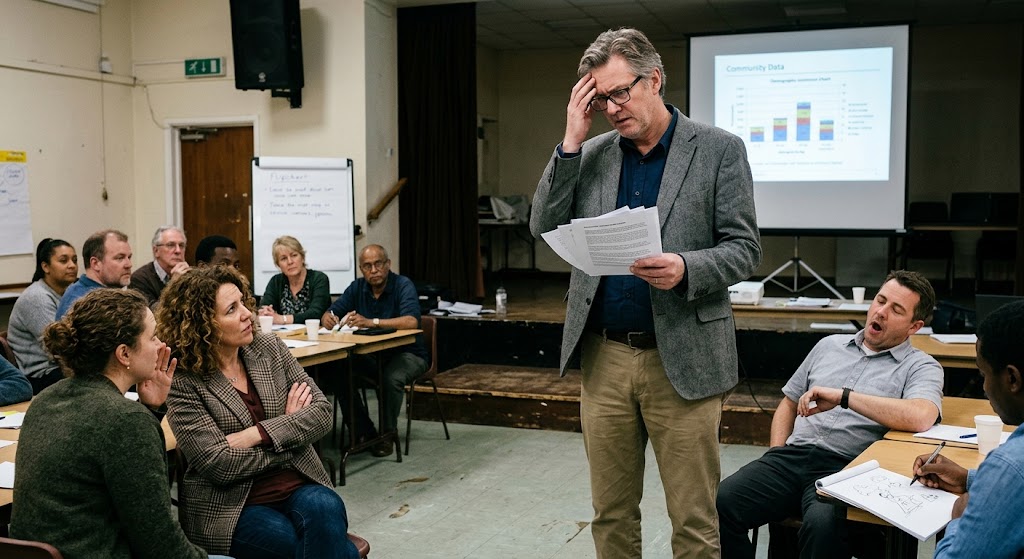
I used to think that the responsibility of a leader was to be right. Not right in an arrogant sense. But right because you had done the work, had thought through the problem, anticipated objections and developed a position you could defend.
And to this day, I still believe you need to do the work, reflect, research and prepare.
What I understand differently today is that you can be completely right – and still be remarkably ineffective.
Early in our careers, we build credibility through knowing – we prepare – we learn to make a case and defend a position. And rightly so. People need to trust our judgement.
This can feel even more urgent when we step into greater responsibilities. We feel our credibility depends on demonstrating that we know what we are doing.
The problem begins when being right becomes more important than being effective.
We become invested in the strength of our position and zoom in on convincing others to see what we see. Refine the argument, gather more evidence, explain again. And if people still don’t come along, we become frustrated: Why don’t they see it?
I have experienced it myself, and seen it many times around me.
Interestingly, some of the most impactful leaders I have known were not the ones attached to having the best answer in the room. They knew their subject and had clear views. They were willing to make difficult decisions and stand behind them.
But they also knew how to create space. They could hold a strong point of view without becoming captive to it. They knew what they believed and why, but remained genuinely open to the possibility that someone else might see something they didn’t. They could allow not only the route, but sometimes even the direction, to change – without experiencing that change as a loss of authority.
This is different from indecision. It doesn’t mean abandoning standards, endlessly reopening decisions or surrendering responsibility.
A grounded leader still does the work, has the point of view and provides clarity.
But being grounded is not the same as being rigid. When people have genuine room to contribute to the way forward, they are more likely to take ownership of what comes next.
Perhaps leadership maturity is the ability to know what you should hold firmly – and what you should hold lightly.
The more secure you become as a leader, the less your authority depends on proving that you were right in the first place.
The question to ask yourself is: Am I defending this position because it needs defending – or because I need to be right?